
Everyday habits
Daily habits that fit a normal working week
A routine only counts if it survives a busy Tuesday. Pick two of the steps below, run them for a month, then add more.
- Fixed wake time, seven days
- Ten-minute walk after lunch
- Water on the desk, refilled twice
- Lunch away from the screen
- Ten quiet minutes between work and home
- One longer walk on the weekend
Two habits held for a month beat six started on Monday
This page is about the small, repeatable habits that hold up when work runs late and motivation is low: sleep timing, short walks, meals you don't have to think about, and a way to leave stress at the office. Nothing here requires a gym membership or an hour of free time you don't have.
Work through the chapters in order, or jump straight to the one that is currently slipping. Each section names the realistic version of the habit — the one that fits a working week in Slovenia rather than a retreat.
Where to start
- Sleep timing night
- Movement that survives a busy day day
- Meals without decisions meals
- Stress that stays at work evening
- The office day, adjusted work
- When habits slip restart
Sleep timing beats sleep perfection
Most sleep advice focuses on duration, but consistency is the lever you can actually control. Going to bed and waking at roughly the same time, including weekends, steadies your internal clock more than any single early night. If you currently sleep six hours and want seven, move your wake time first, not your bedtime.
A fixed alarm plus morning light does more for sleep quality than a supplement. Caffeine after early afternoon and screens in bed are the two habits most people can cut without much effort — and they are usually the ones worth cutting first.
- Wake time, every day
- fixed
- Morning light, first hour
- 10–20 min
- Caffeine cut-off
- early afternoon
- Screens out of bed
- nightly
Movement that survives a busy day
The realistic target isn't a workout; it's breaking up sitting and getting outside. A 10-minute walk after lunch, stairs instead of the lift, and one longer walk on the weekend covers more ground than an abandoned gym plan.
If you commute by car, park further away and walk the difference. If you work from home, treat a short mid-afternoon walk as a meeting with yourself. Consistency matters more than intensity here, and the benefit comes from the total movement across the week, not from one hard session.
When a week really does fall apart, keep the smallest version of the habit: a ten-minute walk still counts. That is the whole idea behind the Movement and Active Days page, which takes the weekend version of this habit further.


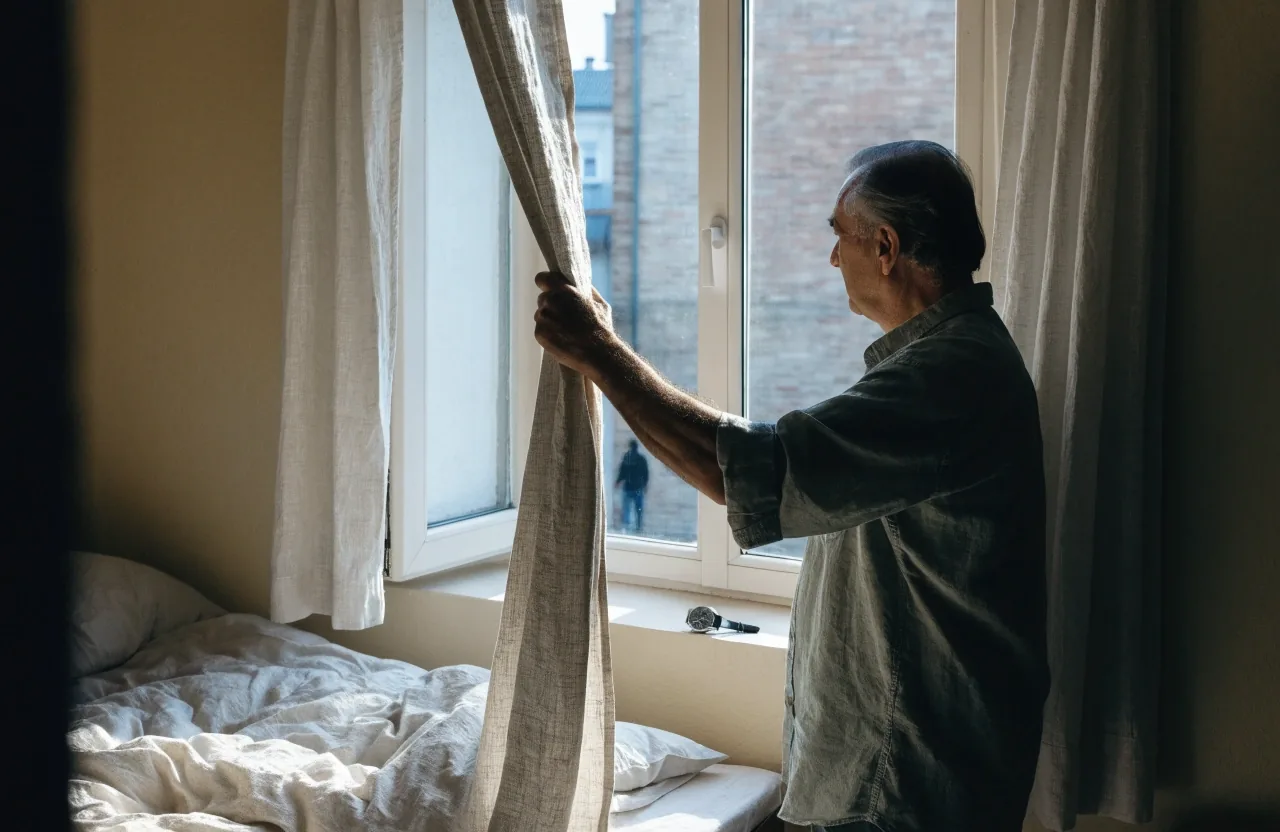
Where the habits actually happen: a desk, a window, and ten clear minutes before the evening starts.

Meals you don't have to decide
Decision fatigue is why people order takeaway on weeknights. The fix is a small rotation of meals you can make without thinking, built around vegetables, a protein, and a starch.
Slovenian staples fit this fine: a stew, a soup, a plate of seasonal vegetables with eggs or fish. Keep water as the default drink and add fruit where you'd otherwise reach for something packaged. You don't need to track anything — if a meal keeps you full for three or four hours, it's doing its job. The Nutrition Basics page goes further into the food side.
Stress that doesn't follow you home
Workplace stress is named as a priority in Slovenia's National Health Care Plan 2026–2035, which is a policy signal that this is a widespread issue rather than a personal failing. On a practical level, a short transition between work and home helps: a walk, a shower, or ten minutes of quiet before you engage with anything else.
Meditation in nature is one option, but a calm kitchen table works just as well. The point is giving yourself a clear marker that the workday ended, so the evening does not quietly become an extension of the afternoon. Stress management here is mostly about a boundary you can hold on a bad week, not a technique you perform perfectly.
A transition that works
-
1
Stop at a fixed point, close the laptop, and write tomorrow's first task down.
-
2
Walk or shower before you sit down with anyone — ten minutes is enough.
-
3
Keep the first evening hour screen-light and let the day close.
The office day, adjusted
If you sit for most of your working hours, small structural changes beat willpower. None of the four moves below require permission, a budget, or a workplace health program — though some Slovenian companies do run one, and it is fine to start without it.
Take phone calls upright
Two or three calls standing restores more posture than a single stretch break at the end of the day.
One meeting on foot
If the format allows, take a short call or a one-to-one outside. The conversation usually improves too.
Water bottle on the desk
Visible water gets drunk. Keep it within arm's reach and refill it twice across the working day.
Lunch away from the screen
Even twenty minutes off-screen changes how the afternoon feels and how much you eat without noticing.
Alcohol, smoking, and when habits slip
Two of the chapters on this page need a plainer voice than the rest. Open them below; both are short.
Alcohol and smoking: the boring truths evidence
These are the two habits with the most reliable evidence behind them, and the guidance doesn't change with the seasons. Less is better, and none is best. That's not a moral position, it's just where the data sits.
If cutting back feels hard, that is worth mentioning to your doctor rather than managing alone. We won't dress this up with a wellness angle, because there isn't one.
When habits slip — the restart rule restart
Routines will break. Illness, travel, and deadline weeks interrupt them, and that is normal rather than a failure. The useful skill is restarting quickly instead of waiting for a perfect Monday.
Keep the smallest version of each habit available: a ten-minute walk still counts, a simple meal still counts. People who recover fast from interruptions tend to keep their routines longer than people who never miss a day.
Making it stick past month one
Two things help. First, attach a habit to something you already do — walking after lunch rather than at some unspecified time. Second, track it loosely, not obsessively. A mark on a calendar is enough.
If a habit needs a broader frame, the pages below take each side further. Start where your week is most likely to break.
Keep going from here
Questions about fitting a routine into your week?
Write to us with the week you actually have — shift work, long commute, kids, whatever is in the way — and we will point you to the two habits worth starting with. We answer from Monday to Friday, 9:00 AM to 6:00 PM, and it is a real person reading.
Gosposka ulica 14, 1000 Ljubljana · +386 2 250 8192 · [email protected]